 Proyecto Fénix
Which one? The PDF opens straight away in the browser, on any phone or computer. The EPUB is saved in Downloads and is read with a reading app (Google Play Books on Android, Books on iPhone, Kindle or Kobo), which lets you enlarge the text.
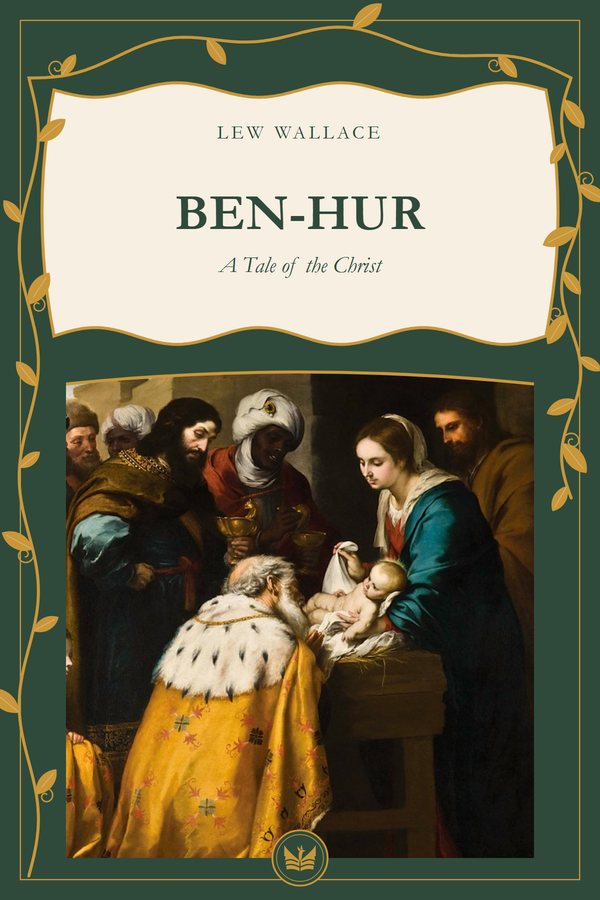
Ben-Hur: A Tale of the ChristFree EPUB and PDF
Why read it
It is one of the great adventure novels and, at the same time, a story of conversion: Ben-Hur learns that the kingdom he awaits is not of this world, and that forgiveness is worth more than revenge. It suits young and adult readers, and anyone who wants to approach the life of Christ through the eyes of his contemporaries. Its prose is broad and somewhat solemn, but the action never lets up.
Summary
Judah Ben-Hur, a young Jewish prince of Jerusalem, is betrayed by his childhood friend, the Roman Messala: one accident is enough to send him to the galleys and make his mother and sister disappear. He survives the oar, saves a tribune's life in a sea battle and returns to the East rich and adopted as a Roman, bent on revenge, which climaxes in the famous chariot race at Antioch. As he searches for his family, his story crosses again and again with that of Jesus of Nazareth, from the coming of the Wise Men to Calvary.
Prepared by
Juan Ignacio Alcalde G.
Quotes
There is a kingdom on the earth, though it is not of it—a kingdom of wider bounds than the earth
nor shall any man see it until he hath first known his own soul; for the kingdom is not for him, but for his soul.
See 2 more quotes
His habit is to move in mystery, yet sometimes he permits us to think we see and understand him.
Out of that vast tomb Christianity issued to supersede the Cæsars.
Moral rating
6 of 6: No drawbacks. See on delibris.org
Similar books
- Quo Vadis: A Narrative of the Time of Nero · Henryk Sienkiewicz
- The Ball and the Cross · G. K. Chesterton
- The Innocence of Father Brown · G. K. Chesterton
